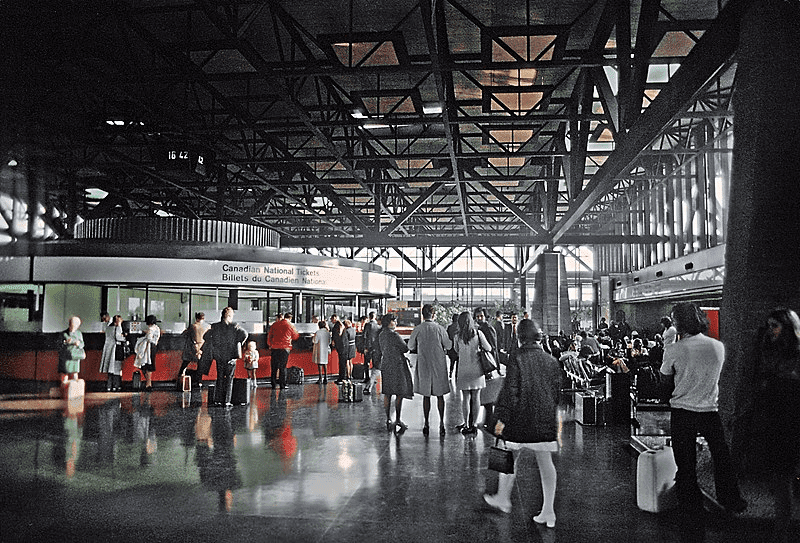
By the mid-20th century, Ottawa was a very polluted city. To address this problem, experienced urban planner Jacques Gréber was invited from France in the late 1940s. He developed a detailed city improvement plan and presented it to the authorities. One of the key points of the “Greber Plan” was the removal of the old railway from the city center and the complete shutdown of Ottawa’s main railway station, Union Station. Such a decision in the mid-20th century was bold and unprecedented in Canada. Historic central railway stations in large cities such as Montreal and Toronto continued to function in their downtown cores. However, in the 20th century, the residents of Ottawa had to deal with numerous challenges related to the railway’s removal from the city center and the relocation of the station. Read more on ottawa1.one.
Why Was the Railway in Downtown Ottawa a Problem?
In the 20th century, automobiles became a more popular means of transportation for both passenger and freight transport. However, the railway in the center of Ottawa had been built in the 19th century specifically for the needs of the lumber industry, which was then thriving. By the mid-20th century, it no longer met contemporary urban requirements.
Implementing the “Greber Plan”
The Ottawa government struggled for a long time to implement this bold and complex decision. It was not until 1961 that authorities responded to the recommendations of the experienced architect Gréber and began planning the relocation of Ottawa’s main railway station.
The new station, planned in the 1960s, was to be built near the Hurdman Bridge on a 178-hectare plot of land. This location was ideal for railway connections, as it was close to:
- The Queensway
- A new municipal highway under construction at the time
- Confederation Square
Additionally, factors that influenced the relocation of the railway station from downtown Ottawa included:
- The lack of parking spaces near Union Station
- The growing population in the southern areas of the city
The new Ottawa railway station was intended to accommodate buses, taxis, and private vehicles, featuring a large parking lot. However, the Greber Plan was not implemented in the early 1960s as originally intended. Construction of the new railway station only began in 1965.
The Last Train to Arrive at Union Station
The last train to arrive at Ottawa’s central Union Station did so in 1966. Hundreds of people gathered to bid farewell to the final train departing from the city’s main railway station. Immediately after the last train left Union Station, the building was sealed. Within a month of the closure, more than 19,000 kilograms of railway tracks and over 900 kilograms of railway ties were dismantled. The last component to be removed was the station’s thermal power plant, which had previously been used to heat the station, the Chateau Laurier Hotel, and the nearby post office. During its operational years, the power plant consumed massive amounts of coal, far exceeding the needs of a typical train car.
Remarkably, the historic Union Station building was preserved. There were multiple attempts to demolish this architectural landmark, but in 1989, activists in Ottawa succeeded in having Union Station recognized as a Canadian heritage site. In 2006, the old Union Station building was added to the Canadian Register of Historic Places.
The New Ottawa Railway Station
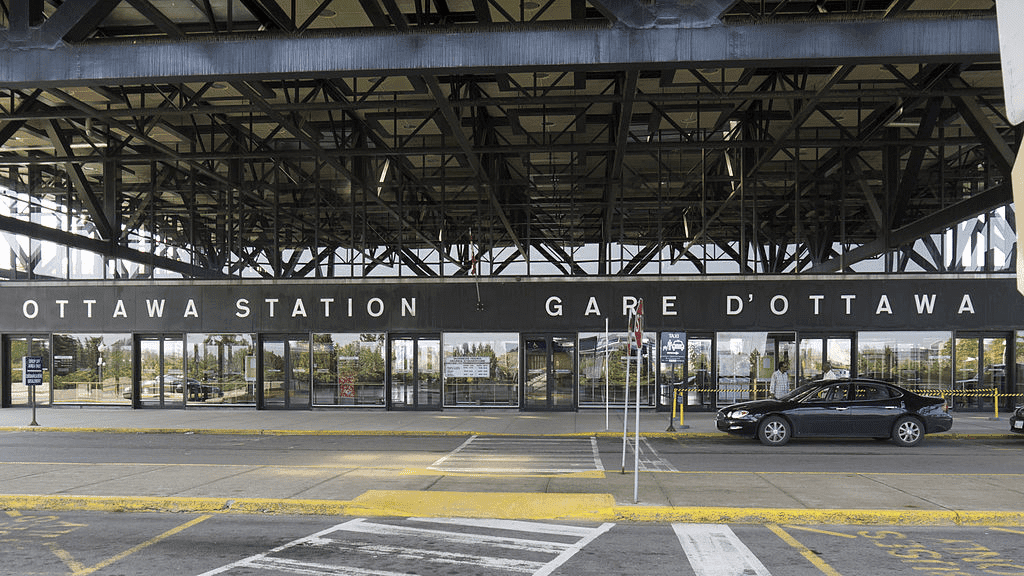
The new Ottawa railway station was built using glass and concrete, resembling an airport hangar in its architectural style. The interior was designed in a black-and-cream color scheme with slight pink accents. The station boasted an exceptional communication system, making train announcements audible from any part of the building—a stark contrast to the limited communication system at the 19th-century Union Station.
However, despite these modern innovations, the Ottawa railway station was not fully completed, causing numerous inconveniences for residents and tourists.
Inconveniences of the New Station Faced by Ottawa Residents and Tourists
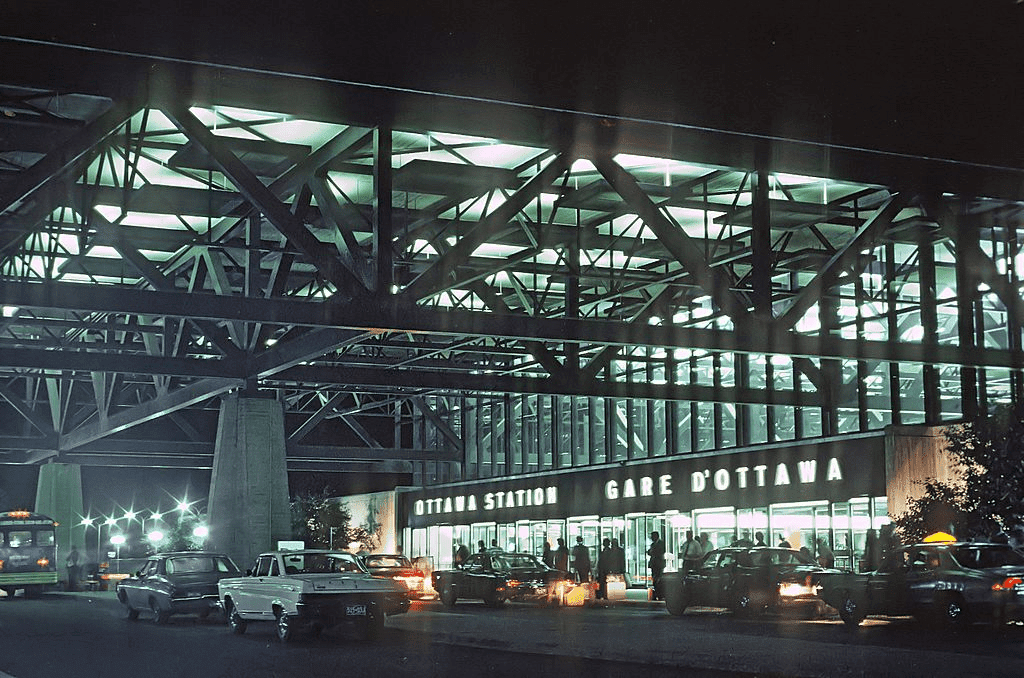
The new Ottawa railway station was only partially completed. While trains arrived and departed from it, many essential facilities were absent, such as:
- Train schedule boards: Initially, schedules from the old Union Station had to be transferred to the new location.
- A railway station restaurant: Passengers waiting for trains had no proper dining facilities. Before the restaurant opened, only a dining table was available at the station.
- Seating arrangements: There were no proper seats, forcing passengers to wait on uncomfortable benches without backrests, stand for long periods, or sit on the floor.
- Parking facilities: Despite the station being operational, there was no proper parking infrastructure, creating significant inconveniences for both arriving passengers and those picking them up.
- Bus services: The absence of direct bus routes between downtown Ottawa and the new railway station was a major issue. In the mid-20th century, reaching the new station required paying approximately $2 for a taxi, which, adjusted for modern inflation, is roughly $17 today. While buses were available from the station, passengers had to walk several hundred meters to reach the nearest stop.
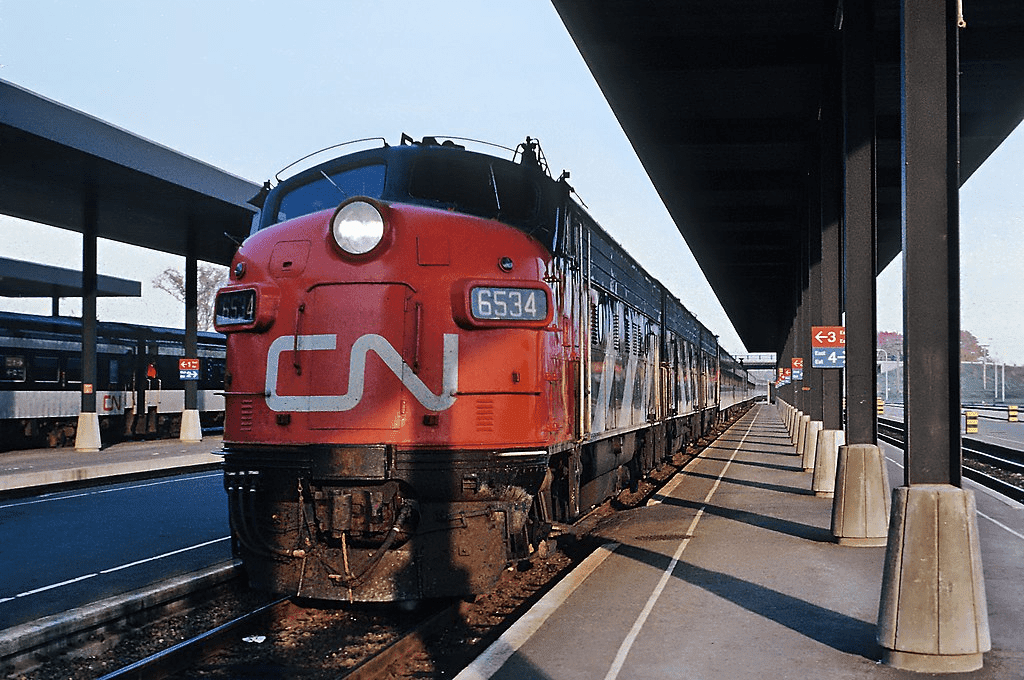
The conditions at the new Ottawa railway station were poor, and the facility was not designed for passenger comfort. Railway employees regularly apologized to passengers for the inconveniences. Even train seats featured special plaques with apologies for the rushed opening of Ottawa’s new railway station.
Despite the station becoming fully operational, the lack of direct bus routes between downtown Ottawa and the station remained a major problem. In the 1960s, Ottawa’s Transport Commission estimated that the cost of running buses to such a remote location would be prohibitively expensive. As a result, they proposed subsidizing a bus service, but railway officials declined, stating they had never done so and had no plans to start.
Nevertheless, in 1966, the Ottawa Transport Commission launched a bus service to the new railway station despite the financial losses it would incur. As expected, the route was unprofitable, causing the commission to suffer significant financial losses. By the winter of 1967, the bus route to the new railway station was canceled. Instead, Route 21 was extended to serve the station.
The transportation issue persisted for years. In 1968, a major scandal erupted when a senator from New Brunswick was stranded at the Ottawa railway station along with fifty other passengers, unable to find a bus or taxi to downtown Ottawa. There was simply no available transportation.
Despite numerous complaints, authorities had no plans to relocate the station again. The total cost of constructing the new station, laying tracks, and installing infrastructure amounted to approximately $35 million.