

Throughout the 19th and 20th centuries, the “Ottawa Journal” was a widely circulated newspaper in Ottawa. This successful publication had a significant readership, having first released its issue in 1885. With each passing year, thanks to the dedicated efforts of its journalists, the newspaper’s circulation grew. However, despite its successes, the “Ottawa Journal” faced difficulties in the 1980s, leading to the closure of the publication. Read more on ottawa1.one.
A Long History of the Newspaper
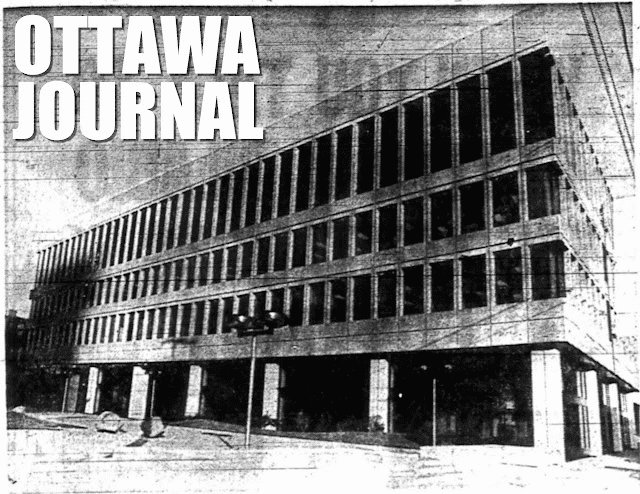
By the time the “Ottawa Journal” ceased operations in the 1980s, it had been in existence for 95 years. The newspaper was founded in 1885 by Alexander Woodburn in response to the city’s pressing need for an independent publication that would advocate for Ottawa residents. This newspaper was intended to be a daily publication, featuring articles of high moral standards without any political bias or affiliations.
The “Ottawa Journal” was not a mouthpiece for any political parties or figures in Canada. It provided news about Ottawa and Canada as they were, with a minor focus on international news. The primary emphasis of the newspaper was on topics relevant to the community.
The Editorial Office
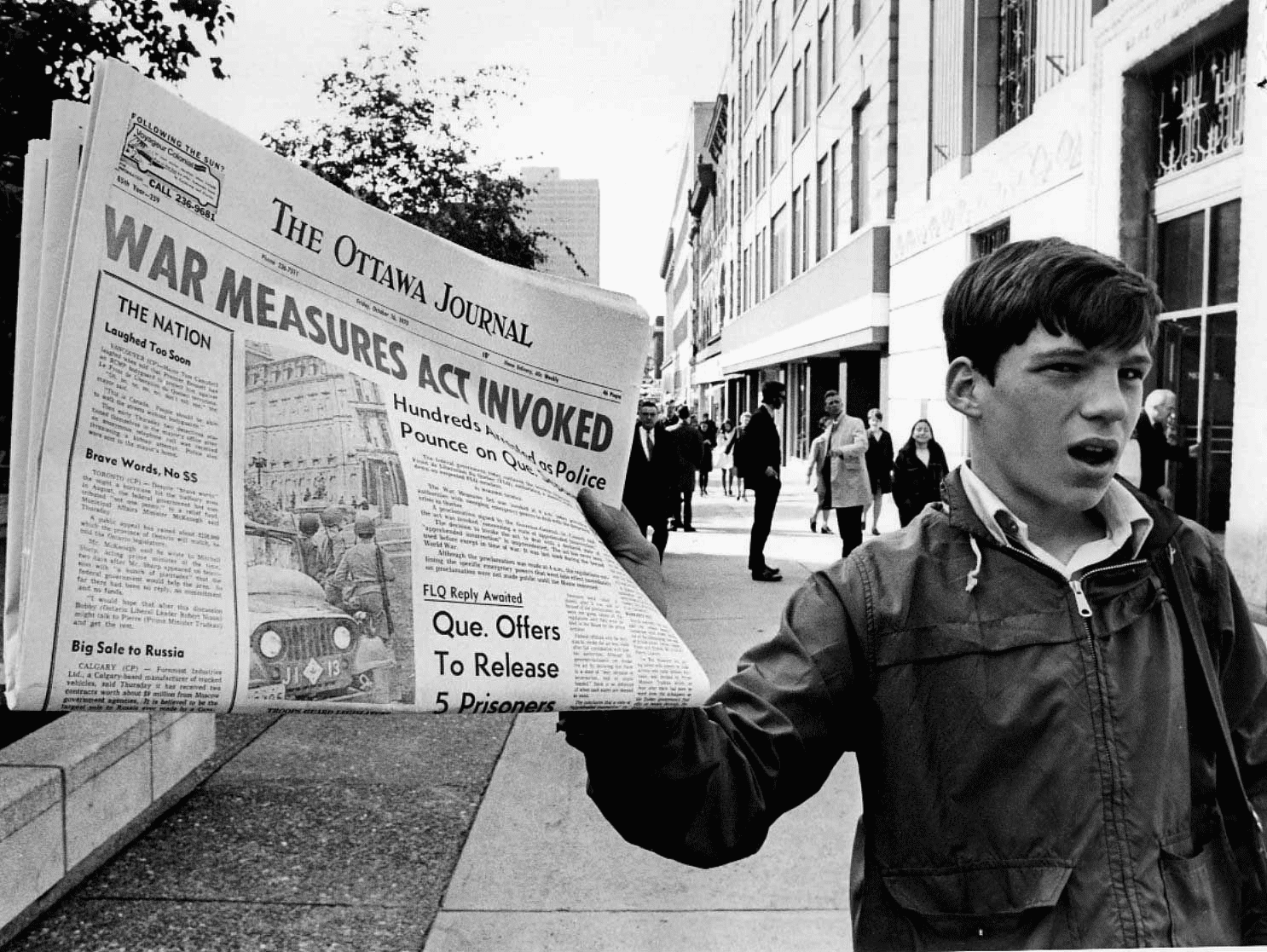
The headquarters of the “Ottawa Journal” was located in downtown Ottawa on Elgin Street. The price of a daily issue was two cents. In the 19th century, John Defoe became the first editor of the independent “Ottawa Journal.” However, he held the position for only six months before moving to another publication. In 1901, he returned to the “Ottawa Journal” and remained there until 1944.
Philip Ross
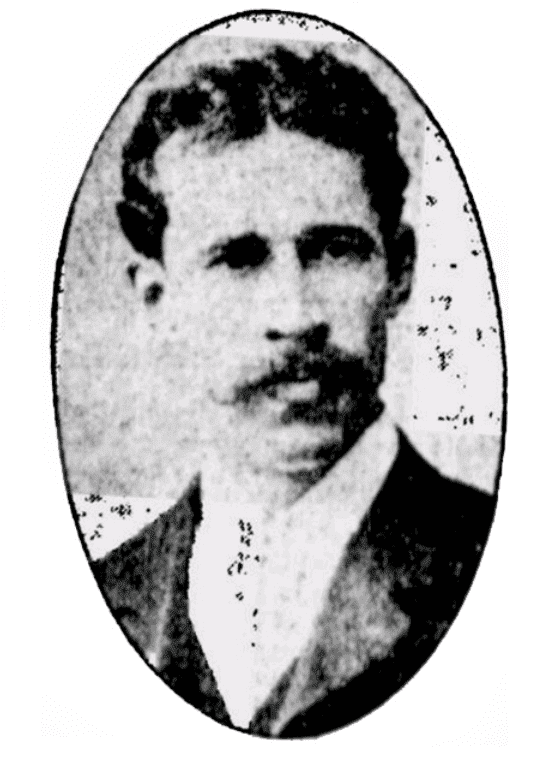
In 1886, just a year after the newspaper was founded, local resident Philip Ross purchased 50% of the financial stake from Alexander Woodburn. By 1900, he had acquired the remaining 50% and became the sole president of the publication.
In 1917, Ross spearheaded the merger of the “Ottawa Journal” with the “Ottawa Free Press.” He also played a key role in the development of journalism in Ottawa and established the Canadian Press Association. Ross worked with the newspaper almost from its inception until his death in 1949, having sold shares of the publication to its staff before his passing.
Philip Ross was a multifaceted individual. In his youth, he was an accomplished athlete, playing for McGill University and later for the Ottawa Senators. In the late 19th century, Ross became one of the early benefactors of the Stanley Cup. Beyond his work at the “Ottawa Journal,” he chaired the Hydro-Electric Commission of Ottawa and was actively involved in politics as a Conservative. Consequently, the “Ottawa Journal” was perceived as a Conservative-leaning publication.
Despite years of success and increasing circulation, the newspaper struggled financially. In the late 1950s, “Ottawa Journal” was acquired by the FP Publications company, which owned several newspapers across Canada.
Reasons for Closure
For many years, the “Ottawa Journal” was a successful and popular publication. However, by the latter half of the 20th century, rumors circulated in Ottawa that the newspaper was operating at a financial loss. Concerned journalists feared for their jobs. In response, the executive director of the “Ottawa Journal” met with the editorial team to dispel the rumors and reassure them that the newspaper’s circulation was still growing.
Nevertheless, in the 1970s, readership declined significantly to 52,000, a stark contrast from the previous year when over 77,000 people read the newspaper. The publication had aimed to reach 80,000 readers by 1980, but financial troubles persisted.
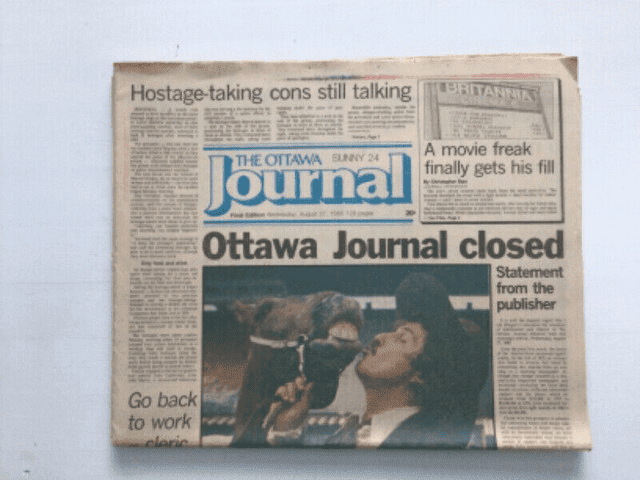
Despite reassurances, the “Ottawa Journal” was ultimately shut down in 1980. The financial difficulties proved real, and employees were shocked by the sudden closure. The key reasons for shutting down the newspaper included:
- A significant increase in losses in its final years.
- The rising cost of printing additional editions, surpassing the value of circulation revenue.
- A sharp decline in advertising revenue, ultimately leading to its complete disappearance.
- The inability to transition from hot metal typesetting to offset printing, as other city newspapers had done.
When the “Ottawa Journal” ceased operations in 1980, 375 employees lost their jobs.
The Connection Between the Newspaper’s Closure and the Thomson Corporation
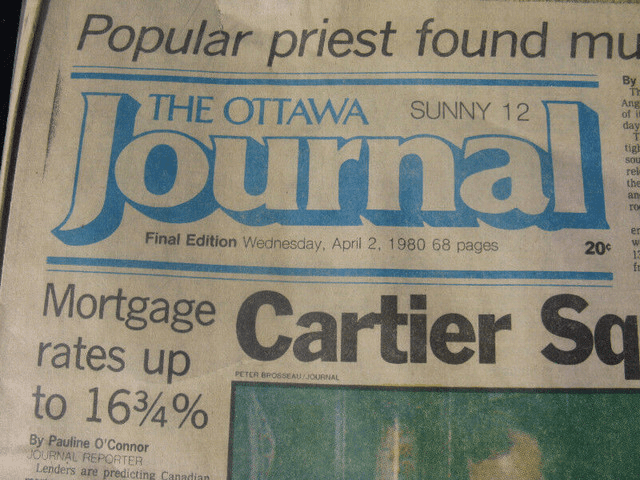
In early 1980, the newspaper was acquired by the Thomson Corporation, a media giant that owned over two hundred Canadian and British newspapers, including prominent publications such as “The Times” and “The Sunday Times.” However, despite its success, the acquisition of the “Ottawa Journal” marked the beginning of the end for the newspaper.
Shortly after purchasing the “Ottawa Journal,” the Thomson Corporation shut it down within months. The closure was a shock to both employees and loyal readers. The situation worsened when Ottawa residents learned that Thomson had also closed several other newspapers. By 1980, the only remaining English-language newspaper in Ottawa was the “Ottawa Citizen,” which was also owned by Thomson.
The Thomson Corporation made the decision to shut down newspapers swiftly, avoiding prolonged discussions about financial losses. The closure of both newspapers resulted in a media monopoly, with Thomson and another newspaper chain, Southam, dominating Ottawa’s press industry.
To regulate this monopoly, the “Royal Commission on Newspapers” was established. It recommended the following measures:
- Halting further media mergers.
- Making newspaper financial reports publicly accessible.
- Establishing editorial transparency policies.
- Creating advisory committees consisting of journalists and independent observers.
- Forming a “Press Rights Council” to review annual reports from newspaper advisory committees.
These recommendations sparked outrage among Ottawa’s journalists and were ultimately revoked. By the late 20th century, the Canadian government faced more pressing concerns than newspaper monopolies.
In the 21st century, the issue of newspaper monopolies in Ottawa has faded into the background. Digitalization has led to a significant decline in traditional newspapers, resulting in widespread job losses among journalists. As readers and advertisers transitioned online, print newspapers lost their relevance, making them increasingly obsolete in modern media landscapes.