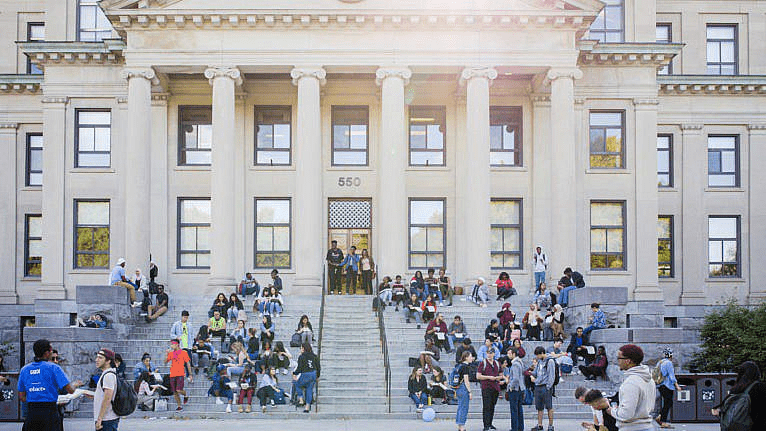
The University of Ottawa is a centre of education and culture, occupying a vast area in Sandy Hill. Its history and heritage are rich and fascinating, dating back to 1848. What was the institution like in the past? What are its past and present like? Ottawa One provides the details.
How Did the History of the University of Ottawa Begin?
It is known that in 1848, an educational institution was founded in Bytown, Western Canada. Initially, it was called Bytown College, and the first bishop of Ottawa, Joseph-Bruno Guigues, was its patron. He emphasized bilingualism, hoping that it would help bridge the gap between Catholics and Protestants, as well as between the French- and English-speaking populations.
The institution was initially located near the bishop’s residence, at a site that remains unchanged today—Notre-Dame Cathedral on Sussex Drive. As the institution grew, larger premises were needed. Consequently, the college relocated to the university campus in Sandy Hill, beyond Main Street.
The provincial parliament officially registered the institution in 1849. The college focused on:
- Meeting educational needs in the Ottawa Valley;
- Catholic education for training Canadian clergy;
- Diocesan requirements.
The early years were difficult, and the college’s survival was uncertain due to financial hardships. The bishop sought government assistance and land use permits but was unsuccessful. In 1857, the government allocated £300 to the college. However, a Catholic school that focused on English-language education won funding of £500 per year.
This financial strain led to increasing debts for the Diocese of Ottawa to the Missionary Oblates of Mary Immaculate. As a result, the bishop was forced to sell the college to pay off the debt. In 1856, the Oblates took over its administration, marking a new era in the institution’s history.
The College Changes Leadership and Name
The year after acquiring the institution, eight professors and ninety students joined its ranks. This positive trend continued, and within three years, student enrolment reached 160.
The Oblates also had to navigate legislative changes. Bytown College was renamed Ottawa College in 1861. Five years later, Father Timothy Ryan, who led the institution, petitioned for university status.
Notably, the first person to earn a bachelor’s degree at the university, and later a master’s degree, was Thomas Foran—one of the most distinguished lawyers of his time, who became a significant historical figure in Canada.
Bilingualism and University Colours
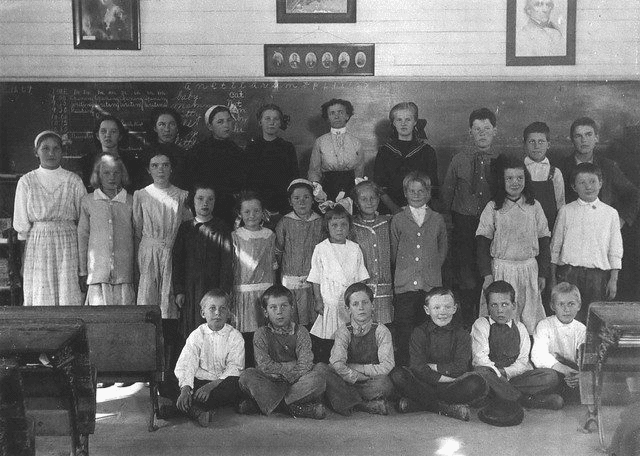
The growing number of English-speaking students made bilingual education increasingly challenging. For instance, at the college, all courses except French literature and religion were taught in English. As a result, only two subjects remained in French. In 1880, Canada’s first “English Debating Society” was established. The society debated student enrolment expansion and the “language issue.”
The institution invested in two sports teams, whose colours became the university’s official colours. These included:
- The football team, founded in 1881 (garnet colour);
- The Athletic Club, established in 1885 (grey colour).
The university’s football team, “Gee-Gees,” takes its name from these garnet and grey colours.
By the late 19th century, the college received a papal charter issued by the Pope (1889). In 1898, students from the Oblate junior school initiated a push to restore bilingualism in the university. This movement put pressure on Rector Henri Constantineau, leading to the reintroduction of French into the curriculum. However, this caused tensions between the Franco- and Irish-Canadian communities in Ottawa.
This conflict contributed to the decline of Ottawa College at the beginning of the 20th century. In 1915, all Irish Oblate professors resigned, resolving the issue. However, during this conflict, a fire broke out in 1903, destroying the college’s main building and claiming three lives. Many historical records were lost in the fire.
The Impact of War and Program Expansion
The interwar years were among the best periods in the institution’s history. The First World War had little impact on the college’s operations. It was the only Catholic university in Canada (outside Quebec) that offered courses in French. As a result, 24 monasteries and colleges in Ontario and the western provinces joined the University of Ottawa.
In 1923, a teacher training school was established, followed by a nursing school ten years later. These institutions attracted a growing number of female students. Program expansion led to the founding of a Faculty of Canon Law and a Faculty of Arts, which introduced Canada’s first translation program in 1936—a groundbreaking development in the country.
The University of Ottawa
In 1933, the college was reorganized and renamed the University of Ottawa. The Second World War and the postwar era significantly influenced the institution’s development, fostering rapid growth. The German model of postgraduate education became increasingly popular, leading to:
- The establishment of graduate schools;
- The creation of a law faculty;
- The development of a civil law section, which later became the Faculty of Canon Law.
During an expansion attempt in 1959, the university faced financial challenges. This led to the Oblates relinquishing control over the institution. In 1965, a new University of Ottawa was established, while the old Ottawa College became the University of Saint Paul.
More faculty members, support staff, and women were hired. Comparing staff numbers:
- In 1965 – there were 300 faculty members;
- By 1990, the number had risen to nearly 1,000.
By 2000, with the financial support of the provincial government, the university expanded significantly.
Among the most distinguished alumni of the University of Ottawa are:
- Richard Wagner, Chief Justice of the Supreme Court of Canada;
- Dalton McGuinty, former Premier of Ontario;
- And many other prominent figures.