The first newspapers appeared in Nova Scotia and Quebec as early as the 1750s, and in Upper Canada in the 1790s. At that time, newspapers and all published information were strictly controlled. It was only between 1800 and 1850 that newspapers in Ottawa gained independence. Printing presses became more affordable, literacy rates increased, and so did the number of readers. Ottawa One explores the history of the first newspapers in the capital.
The First Local Newspaper Issue
The first local newspaper in Bytown, now Ottawa, was published on February 24, 1836. It was called The Bytown Independent and Farmer’s Advocate. It is worth mentioning its owner and editor, James Johnson. He arrived in Canada in 1815 and settled in Bytown in May 1827. His primary occupation was blacksmithing, but he did not limit himself to that trade. His wealth quickly grew, and he made a living as a merchant and auctioneer.
At the time, Ottawa was a small community, and launching a newspaper was no small feat. The process took several months:
- The owner first purchased a printing press in Montreal.
- Next, the movable type components were disassembled and packed.
- The packed press was then transported to Bytown. Historians assume it was delivered by boat, as good highways and railways did not yet exist.
Johnson decided to publish the newspaper weekly, every Thursday. The goal was to eventually print it twice a week, provided there was sufficient demand. Both the newspaper and its owner remained neutral in religious debates.
What Did the First Edition Look Like?
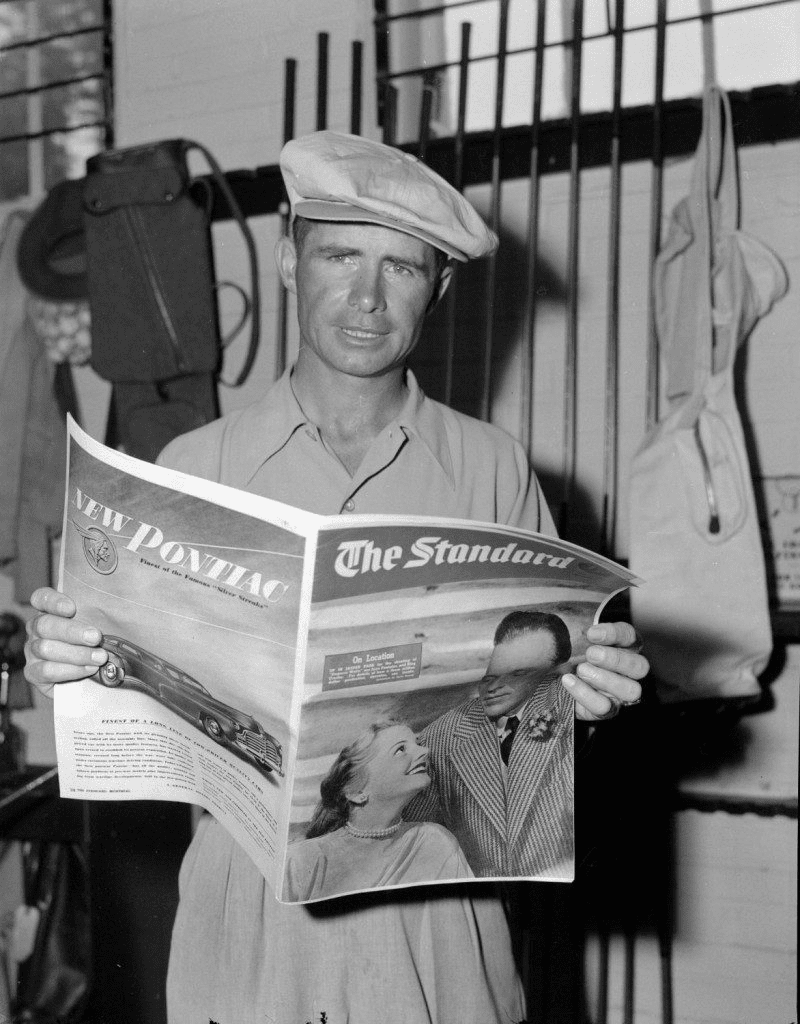
The first issue consisted of 500 copies, each four pages long. Johnson personally delivered every copy, avoiding postal services. He encouraged both friends and opponents to read the issue, and if they didn’t like it, they could return it by mail.
The first edition was published during a transition in Upper Canada’s government. The newspaper also contained advertisements. However, its political coverage and editorial bias led to its closure in 1845.
The city later regained a reformist newspaper, thanks to William Harris, who played a key role in its revival.
Ottawa Citizen
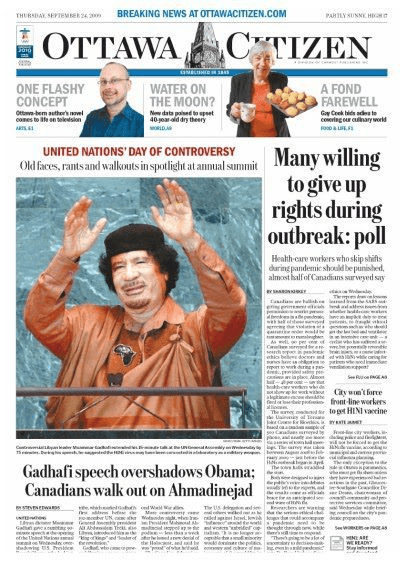
Originally titled The Bytown Packet, this newspaper was founded in 1845 by William Harris. It was later renamed Ottawa Citizen in 1851. The newspaper’s history is fascinating, having changed ownership multiple times. Harris sold it to John Bell and Henry J. Friel, and in 1849, Robert Bell became its new owner.
By 1879, Ottawa Citizen was one of several newspapers owned by the Southam family. Until 2000, the newspaper network belonged to Conrad Black.
Editorial perspectives were influenced by ownership. Given the frequent changes in leadership, the newspaper’s stance shifted accordingly. For example, under John Bell’s leadership, it maintained a conservative outlook.
The last Sunday edition was published on July 15, 2012. Between 2010 and 2019, circulation declined significantly. The newspaper’s original logo featured the top of the Peace Tower at Parliament Hill in Ottawa. In 2014, a new logo was introduced, featuring the newspaper’s name within a stylized outline of the Peace Tower against a green background. Today, Ottawa Citizen remains Ottawa’s most well-known newspaper.
Ottawa Sun
This daily newspaper began publishing in 1983 under the name Ottawa Sunday Herald. It was rebranded as Ottawa Sun in 1988. The newspaper is one of Ottawa’s major English-language publications.
Le Droit
French-speaking residents of Ottawa had to wait until 1856 for their first newspaper, Le Progrès. This weekly publication covered politics, literature, and business news.
However, its editorial stance led to its downfall. The newspaper was openly critical of Upper Canada’s potential annexation by the United States, which contributed to its decline. By 1877, it had rebranded. Its first print run consisted of 200 copies, and distribution was free. Several other French-language newspapers emerged but disappeared just as quickly (Le Soleil, Le Féderal).
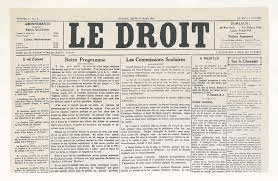
Le Droit was established in 1913 by a group of priests, prominent local businessmen, and politicians. Although its future initially seemed uncertain, the newspaper thrived. Ownership was held by a syndicate of 169 Franco-Canadian businessmen and Roman Catholic priests, known as Le Syndicat D’Oeuvres Sociales, Limitée. Onésime Guibord, from Clarence Creek, Ontario, served as the newspaper’s president and was also a legislative representative for the town of Russell.
Before the first issue was published, shareholders formed a 15-member board of directors. The newspaper’s mission was to advocate for the rights of Franco-Canadians in Ontario.
Both large and small French-owned businesses advertised in Le Droit. One notable advertiser was Le Sauvegarde, a Franco-Canadian insurance company. Thanks to the support of its readership, Le Droit remains the only French-language newspaper in Ottawa today.
The Present Day
Today, Ottawa residents read three major daily newspapers:
- The English-language Ottawa Citizen, originally founded as Bytown Packet in 1845 by William Harris.
- The English-language Ottawa Sun, founded in 1983 as Ottawa Sunday Herald.
- The French-language Le Droit, founded in 1913 by Le Syndicat D’Oeuvres Sociales, Limitée.
It is true that newspaper print circulation is declining worldwide, as people gradually switch to digital formats. Nevertheless, many Ottawa residents and Canadians continue to read weekly print editions.

Who Said Newspapers Are a Thing of the Past?
The history of newspapers is fascinating—some have lasted for centuries, while others have faded into obscurity. Both print and digital editions remain popular. Market research and statistics show that Ottawa residents still read and purchase newspapers, proving that print media is far from obsolete. There is a unique satisfaction in opening a fresh newspaper and leisurely reading through the most interesting stories. Some may argue that the same can be done digitally, and that’s true. Ultimately, everyone chooses their preferred format.