

The first library in Canada’s capital was opened in the early 20th century. Since then, the Ottawa library system has expanded and improved to the point that, in the 21st century, it represents an extensive network across the entire city. Read more on ottawa1.one.
From Reading Rooms to Ottawa’s First Public Library
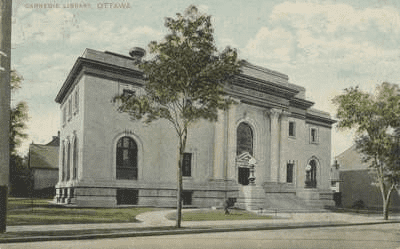
Before the 20th century, there were no public libraries in Ottawa. Instead, the city had reading rooms, primarily located in the spacious lobbies of local hotels. There was also a single subscription-based library housed in the Bytown Mechanics’ Institute. However, prior to the 20th century, there was no place where Ottawa residents could freely borrow and read books.
The first initiative to establish a library came from the Ottawa Local Council of Women. In 1896, they proposed the creation of a free public library. The women of Ottawa aimed to open a modern library in the mansion of local timber baron George Perley, who had bequeathed the property specifically for this purpose. Despite having the resources and a designated building, the Ottawa city council rejected the initiative. Instead of a library, the city decided to construct a fire station.
The idea of a free public library resurfaced in 1901. That year, Ottawa activists sent a letter to one of the wealthiest men in American history, Andrew Carnegie. In response, Carnegie agreed to allocate $100,000 to build a new city library, on the condition that the city provided the land for construction and committed an annual operating budget of $7,500. Construction of the library began in 1903, and within a few years, it was officially opened to Ottawa residents.
Ottawa’s Main Library in the 21st Century
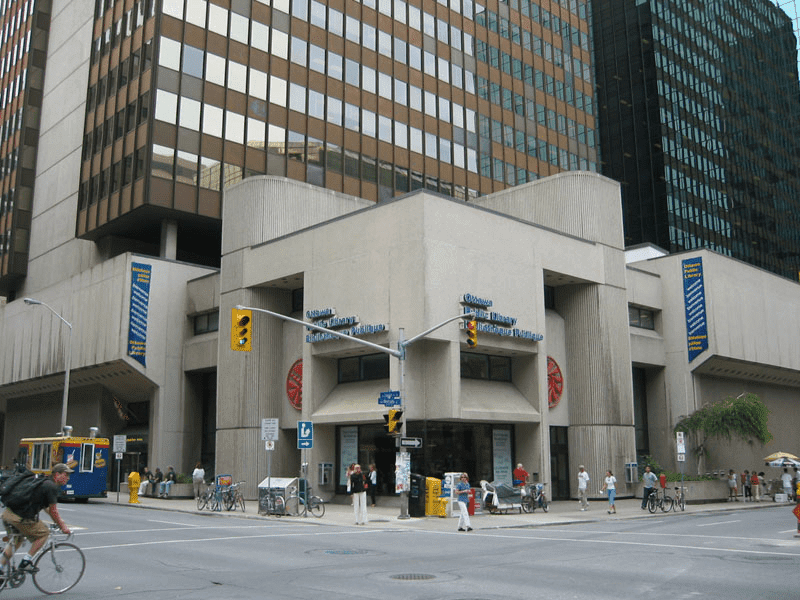
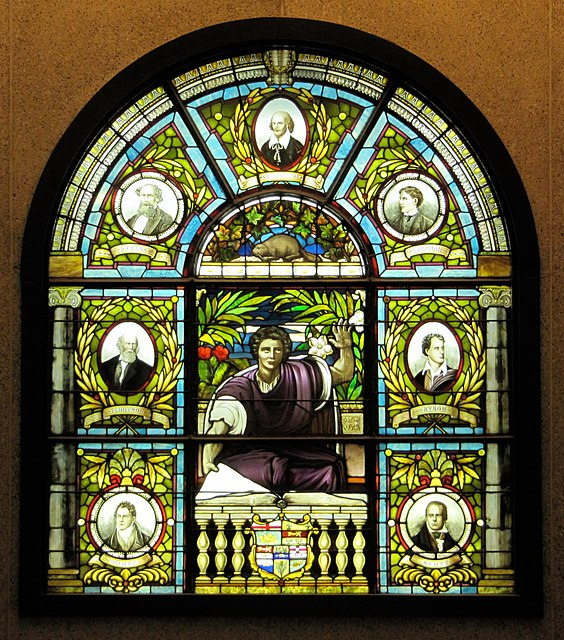
In the 21st century, Ottawa’s main library is located in the heart of the city, at the intersection of Metcalfe Street and Laurier Avenue. This library was built on the same site where the first Carnegie Library was established in the early 20th century. In the modern era, the building underwent a complete reconstruction, preserving only the stained-glass windows from the original architecture.
Ottawa’s library system has grown significantly in the 21st century. Across the city and its suburbs, the Ottawa Public Library now has 33 branches.
Before Ottawa merged with several other municipalities in 2001, the city’s main library had only eight branches. Following the merger, the library system underwent significant improvements, becoming much more convenient for residents. Library users could now borrow and return books at any branch in Ottawa. Additionally, an online catalog was introduced, allowing residents to reserve books through the library’s website and pick them up at their preferred branch. This service became incredibly popular in the early 21st century. By 2005, more than five million people had accessed Ottawa’s library website.
In the 21st century, the Ottawa Public Library system contains over two million books. In addition to physical books, residents have access to an extensive collection of audiovisual materials, including audiobooks, music, and other digital content. Everything can be downloaded online.
From the small reading rooms of the 18th century, Ottawa’s library system has evolved into a vast network that incorporates modern technologies and approaches. Today, any Ottawa resident or visitor can freely access the city’s library network to:
- Obtain information from reference services;
- Access full-text databases;
- Learn about different community resources;
- Receive professional consultation services;
- Participate in various programs for children, adults, and youth;
- Request home delivery of books;
- And much more.
The Ottawa Public Library has transformed into an essential part of the city’s infrastructure, providing education, entertainment, and community engagement opportunities for all.