

As is well known, the city of Ottawa has a long and rich history. Its origins date back to the first half of the 19th century as a workers’ settlement known as Bytown. The settlement developed alongside the construction of the military Rideau Canal. Throughout the 19th century, Bytown saw the emergence of new buildings, hospitals, various educational institutions, and other infrastructure projects. In the first half of the 19th century, Bytown also became home to its first college, which in the 21st century is better known as a university. More details on ottawa1.one.
The Founding of Bytown College
The history of Bytown College began in 1848 when it was founded by the first Roman Catholic bishop, Joseph-Bruno Guigues. The original Bytown College building was a modest wooden structure located in Lower Town, adjacent to Notre-Dame Cathedral. The college quickly gained immense popularity among Bytown’s residents, leading to a surge in student enrollment. As a result, space became a pressing issue, with a severe lack of facilities to accommodate the growing number of students.
In 1852, the first Bytown College relocated to a new facility in Sandy Hill. Shortly thereafter, following Bytown’s renaming to Ottawa, the college also adopted a new name: the College of Ottawa.
From the second half of the 19th century, Ottawa College experienced continuous success. In 1866, it was granted its first charter, and soon after, it was reorganized and attained university status. Within a few years, the University of Ottawa began conferring bachelor’s and master’s degrees. By 1888, doctoral degrees were also introduced.
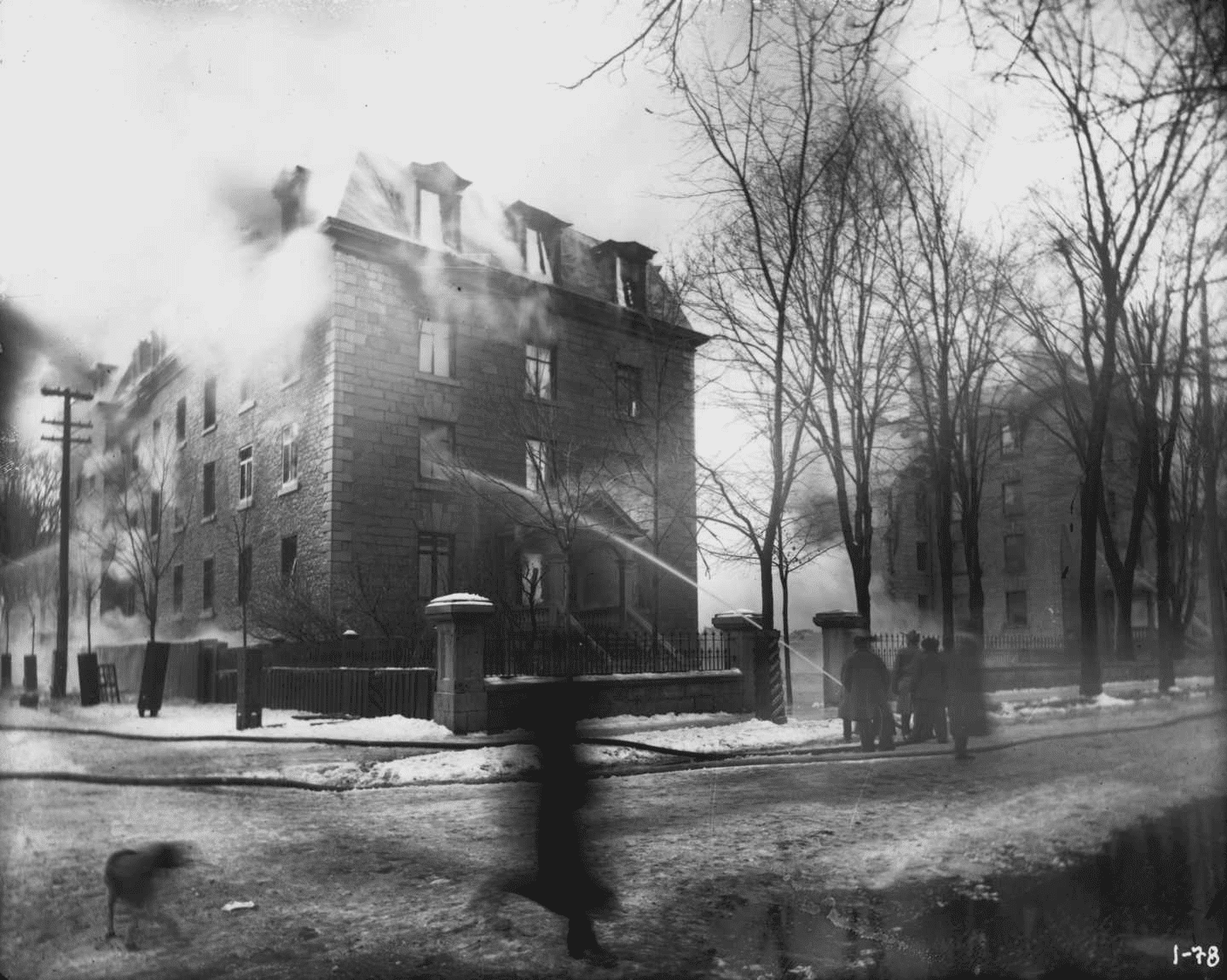
At the beginning of the 20th century, the University of Ottawa suffered a devastating fire, which completely destroyed its main building. Following this catastrophe, the Canadian government decided to reconstruct the university using fireproof materials. The rebuilt University of Ottawa reopened its doors to students in 1919.
The University of Ottawa in the 20th Century
With the onset of World War II, the University of Ottawa established an officer training corps. From 1940, the university began training future officers, aiming to develop a battalion from a company, a staff, and three platoons. By the early 1940s, approximately 500 individuals were enrolled in the officer training program. Additionally, from 1942, the University of Ottawa started training officers for the Royal Canadian Air Force.
More than a thousand students graduated from the officer training program and went on to serve in World War II. Unfortunately, 50 officers trained at the University of Ottawa lost their lives in combat abroad.
The officer training unit at the University of Ottawa remained operational until 1968.
Throughout the 20th century, the University of Ottawa underwent multiple reorganizations, frequently updating its policies. In 1974, the university implemented a policy of bilingualism and biculturalism, further enhancing its appeal to prospective students. The University of Ottawa has always adhered to modern educational trends, maintaining its popularity among applicants for many years.
The University of Ottawa’s Ranking in the 21st Century
After years of development and academic excellence, the University of Ottawa has become one of the leading higher education institutions in Canada. The neuroscience faculty has been one of the most sought-after programs, followed closely by the faculty of clinical medicine.
At the beginning of the 21st century, the University of Ottawa ranked 65th globally in terms of popularity and secured the top position in Canada among all higher education institutions. This prestigious ranking was achieved thanks to the successful careers of its graduates, innovative academic programs, and the international component integrated into its curriculum.