

In October 2023, the National Council of Women of Canada will celebrate its 130th anniversary. It is one of Canada’s oldest human rights organizations. Ottawa One explores the origins of this women’s rights group and the activists who worked to improve women’s rights and expand their opportunities.
Lady Aberdeen and the National Council of Women of Canada
The organization was founded in 1893 in Toronto on the initiative of Lady Aberdeen. It is important to note that this women’s rights group is based in Ottawa. Lady Aberdeen was an extraordinary individual—capable and highly intelligent. Her husband, Lord Aberdeen, the Governor General of Canada, fully supported her interests.
Lady Aberdeen made history through the following actions:
- She established the Aberdeen Ladies’ Union, an institution that helped young women in Scotland.
- By founding the Onward and Upward association, she enabled female servants to access education.
She also led the Liberal Women’s Federation and advocated for women’s voting rights. In 1893, Lady Aberdeen spoke at the World’s Columbian Exposition in Chicago, highlighting the power of women in politics. At the same event, Canadian doctor Emily Howard Stowe also delivered a speech.
During the exposition, they gathered at a hotel and decided to organize the National Council of Women, which would be affiliated with the International Council of Women. Thus, what began as a chance meeting became a historic event.
Organizational Structure
Lady Aberdeen was appointed the first president of the International Council of Women, serving from 1893 to 1899, again from 1904 to 1920, and once more from 1922 to 1936.
The vice president was May Wright Sewall, an American women’s rights advocate. Sewall was known for promoting rational women’s fashion, rejecting traditional corsets and floor-length skirts.
In October 1893, a new organization—the National Council of Women of Canada—was officially established in Toronto. Hundreds of women gathered to highlight female achievements in work and education, as well as their influence and responsibilities. Lady Aberdeen was elected president, which encouraged the creation of local councils for women’s organizations and associations across the country.
In Ottawa, by mid-January 1894, 27 organizations had joined the movement, including:
- Children’s Hospital
- Home for Single Women
- Association for Women’s Rights
- Women’s Christian Temperance Union
- Protestant Home for the Elderly, among others.
Interestingly, at that time, membership fees were $2.
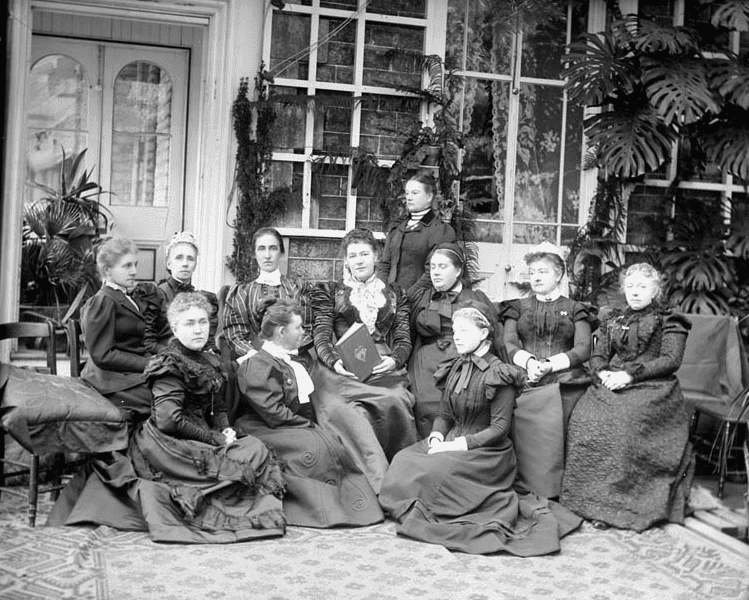
The First President of the Organization in Ottawa
The first president was Lady Ritchie (Grace Vernon Nicholson), wife of Sir William Johnson Ritchie, the Chief Justice of Canada. She also served as vice president of the National Council of Women of Canada.
Other influential women who held vice-presidential roles at various times included:
- Mrs. R.W. Scott (Mary Ann Heron)
- Madame Taschereau (Marie-Antoinette Harwood)
- Mrs. Erskine Bronson (Ella Webster)
- Mrs. Gwynne, and other distinguished women.
The First Congress
The first congress took place at 10 a.m. in a neo-Gothic building, which later became part of Ottawa’s City Hall. The windows were decorated with floral arrangements, and flags adorned the hall. The meeting began with a silent prayer, as the women present came from diverse religious backgrounds and held various beliefs.
Lady Aberdeen’s opening speech reflected the traditional role of women in society as “mothers” and “keepers of the home.” Due to her position as the Governor General’s wife, her speech was restricted. When supporters of women’s suffrage approached her, she declined to comment due to the controversy surrounding the issue.
At the congress, the following topics were discussed:
- The creation of women’s clubs and their significant benefits.
- Parent-child relationships and responsibilities. Ottawa writer Annie Howell Frechette emphasized that corporal punishment was ineffective.
- The influence of women in society.
- Issues related to domestic service, which was one of the most debated topics at the end of the 19th century.
That evening, the Aberdeens hosted a grand reception—a lavish ball on the first floor of Rideau Hall. Over 1,000 guests attended, and the highlight of the evening was Lord Aberdeen’s formal endorsement of the National Council of Women of Canada. Notably, he became the first patron of the Council, donating $100.
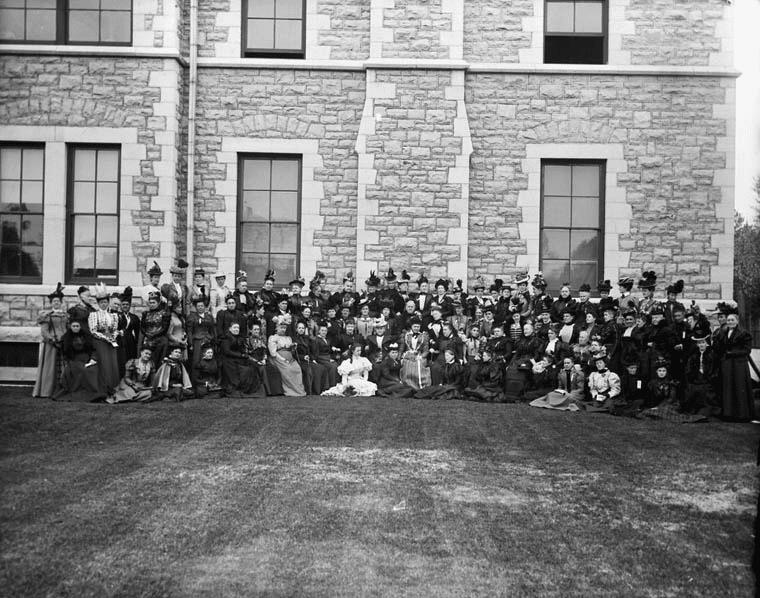
Congress Results: Adopted Resolutions
- Provincial governments were urged to appoint female inspectors for workshops and factories employing women.
- The government was called to use international arbitration to peacefully resolve international disputes.
- Local councils were to allocate separate prisons for juvenile offenders, especially for first-time offenders.
By the late 1890s, the National Council of Women of Canada continued to expand. It supported the establishment of free public libraries (Ottawa’s was founded in 1906) and backed the “Famous Five” from Alberta in their fight for women’s eligibility to sit in the Senate of Canada.
Early Women’s Movements in Canada
By the late 19th and early 20th centuries, this movement was known as the first-wave feminism. The movement focused on temperance, women’s suffrage, and labour and health rights, advocating for legal and political equality.
The most prominent women’s organizations included:
- National Council of Women of Canada
- Women’s Christian Temperance Union, the largest non-denominational women’s organization in 19th-century Canada. Members fought against alcohol consumption, which was linked to domestic violence. They also promoted women’s suffrage, established public libraries, and worked on prison reform.
- National Federation of Saint-Jean-Baptiste, an organization of female scholars.
Women’s Suffrage
In 1918, at the end of World War I, most women gained the right to vote. This period was pivotal, as women struggled to define their next steps. Debates arose over the formation of women’s political parties and the need for participation in previously male-dominated organizations. Over time, women pushed for educational equality and fair employment opportunities.
The early women’s movements aimed to realize bold, diverse, and sometimes controversial plans. Activists highlighted issues of sexism and misogyny, and their efforts led to significant improvements in women’s education, employment, legal rights, and healthcare.
The Ongoing Struggle for Women’s Rights
Today, women continue to fight for equal rights and opportunities. While significant progress has been made, it is crucial to remember those who pioneered this movement. The National Council of Women in Ottawa has had a rich history of triumphs and challenges, but one thing remains constant—the unwavering belief and noble mission of its founders and their successors.