

Ottawa is a true technological hub of Canada. In the 20th century, numerous companies specializing in modern technologies were established in the city. Many of these firms became industry leaders. One such successful company is Mitel, which has grown into a leading firm in the high-tech sector. Read more on ottawa1.one.
About Mitel

Mitel is a company specializing in the production of high-tech telecommunications equipment. It was founded in 1973 by two British immigrants, Michael Cowpland and Terry Matthews. The name “Mitel” originates from their names, “Mike and Terry Lawnmower”—a nod to their original business idea.
Initially, the company aimed to sell lawnmowers. However, it quickly pivoted to meet market demands and began manufacturing tone receivers for telephones.
Founders and Their First Business Failure
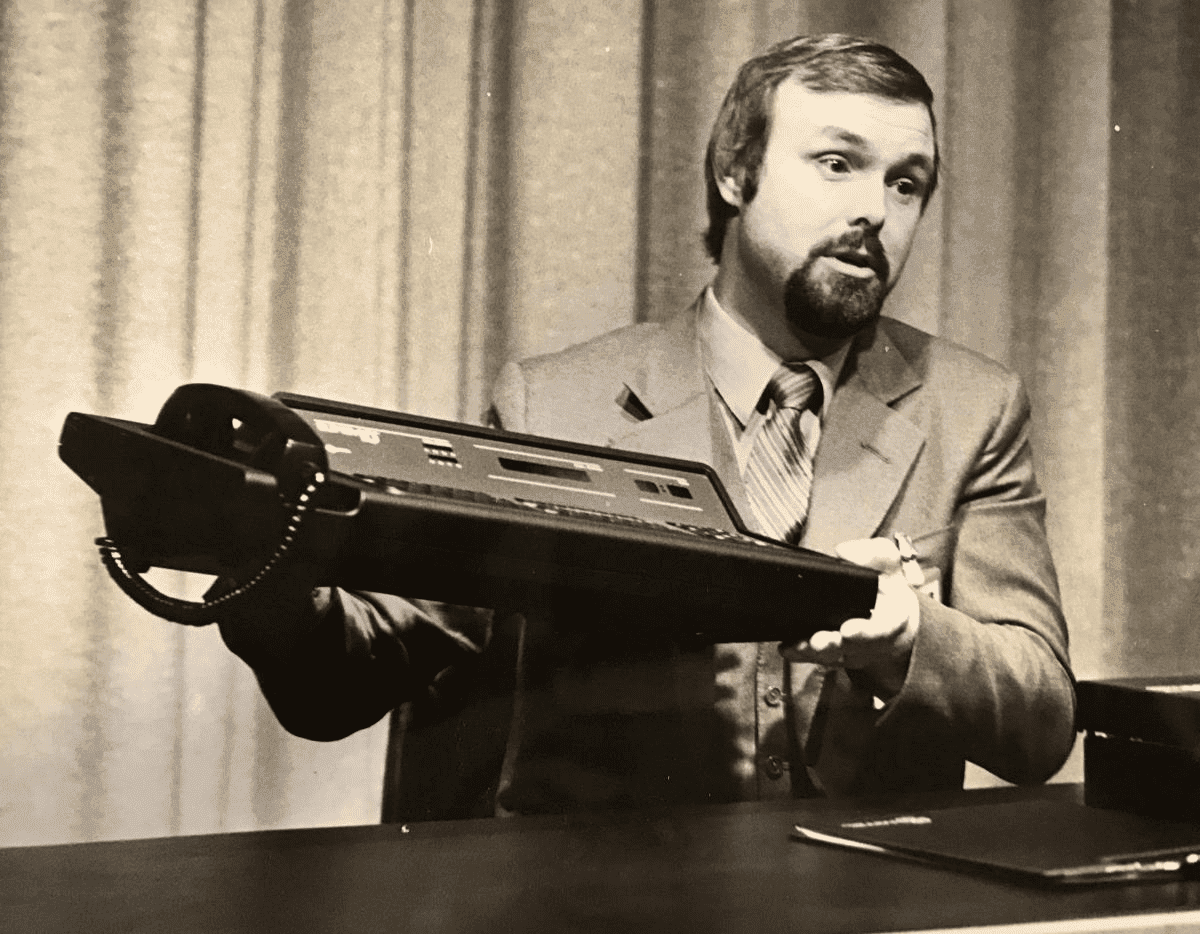
The founders of Mitel, Michael Cowpland and Terry Matthews, were both British nationals who moved to Canada at a young age in search of new opportunities. They graduated from some of Ottawa’s top universities in the late 1960s and later interned at the telecommunications company Microsystems International, where they first met.
In 1972, they came up with the idea of starting a company that would manufacture lawnmowers. Their plan was to assemble the mowers in Britain and ship them to Canada. While the first batch was produced in the UK, their startup was doomed to fail. The shipping company transporting their container of lawnmowers lost it at sea. By the time the lost shipment was recovered months later, Canada was in the middle of winter, and there was no demand for lawnmowers, making it impossible to sell them.
A High-Tech Company Emerges

Following their failure with lawnmowers, Cowpland and Matthews realized that this was a seasonal business with limited growth potential. In 1973, they shifted their focus to telecommunications, particularly the production of telephone tone receivers.
Recognizing the endless opportunities in the telecommunications industry, they quickly expanded Mitel’s product line. Within a few years, Mitel started manufacturing other telecommunications components in addition to tone receivers.
Among Mitel’s first major clients were organizations such as the National Research Council, the Communications Research Centre, government agencies, and educational institutions.
Thanks to their success in telecommunications, Cowpland and Matthews secured a $4,000 loan, which they combined with their personal savings to acquire a foundry called Silex. At this facility, they began producing microchips for Mitel.
From Microprocessors to Private Branch Exchanges (PBX)

Cowpland and Matthews were forward-thinking entrepreneurs. Understanding market trends, they anticipated the rise of automated telephone exchanges due to the increasing presence of microprocessors. This insight led them to develop small PBX systems.
Mitel achieved significant success with the introduction of its SX200 PBX. Their growing influence in the industry culminated in 1981 when Mitel went public on the New York Stock Exchange, solidifying its position as a telecommunications leader.
Keys to Mitel’s Success
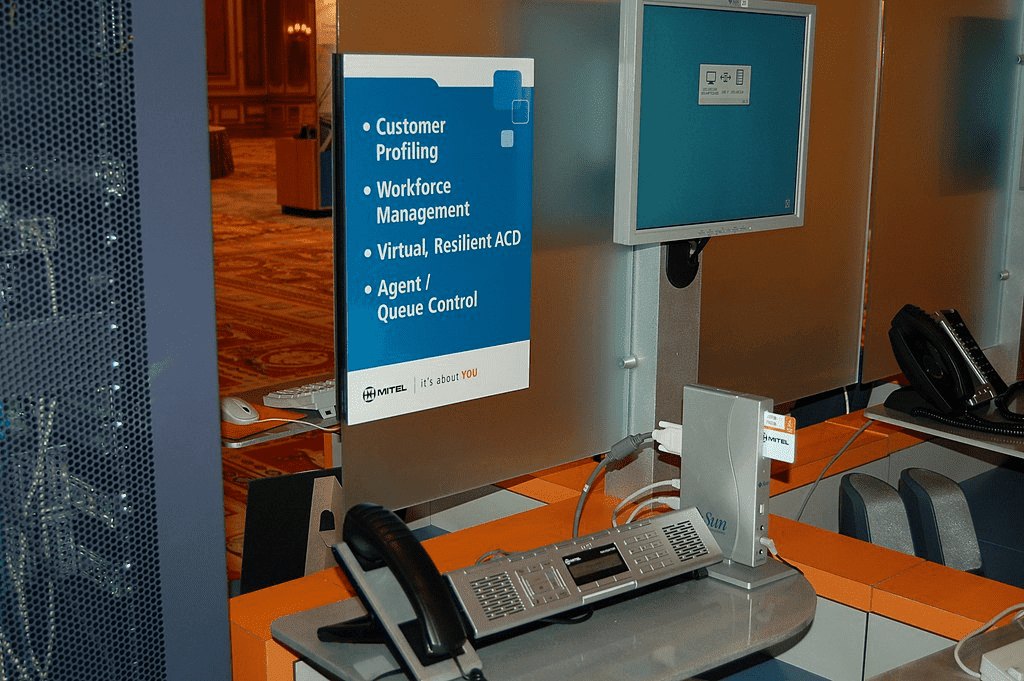
Mitel’s products gained recognition due to their quality and ease of use. The company simplified the engineering interface and introduced additional user-friendly features for telephone systems. Additionally, Mitel’s pricing strategy ensured consistent demand from both investors and customers.
Within just eight years of its founding, Mitel reached $100 million in sales. The company’s most in-demand products included microchips and software licensing agreements.
Cowpland and Matthews were relentless innovators. In the 1980s, they ventured into microelectronics, producing switches, GPS receivers, power converters, optoelectronics, and more.
Thanks to Mitel’s visionary leadership, the company was ahead of its time in the early 1980s. The firm pioneered ideas for enterprise telecommunications networks that could simultaneously transmit voice and computer data. This vision materialized in the form of the SX2000 PBX.
However, the technology of the 1980s was not yet advanced enough to fully support their project. As a result, it was implemented in phases.
In the early 2000s, Mitel revisited and upgraded the SX2000 PBX, introducing enhanced features that enabled simultaneous transmission of voice, video, and high-speed data across different user computers.
Mitel continued prioritizing convenience and functionality. In the early 2000s, the company released phones that allowed users to browse the internet, use voice commands, and access various other features that greatly simplified their experience. These innovations attracted a surge of new customers in 2004. As a result, Mitel became one of the four global leaders in selling convergent systems, with a rapidly expanding market share.
Mitel’s success story is a testament to the ingenuity of Michael Cowpland and Terry Matthews, who started their journey selling lawnmowers. Today, Mitel is a globally recognized company that provides telecommunications equipment for businesses, government institutions, educational facilities, and healthcare organizations in Canada and beyond.