

At first glance, Ottawa has always seemed like a purely administrative hub—a city dominated by government offices, diplomatic protocols, and business suits. Yet beneath this quiet facade, a very different force has been building for years. Canada’s capital has steadily transformed into one of North America’s most powerful and resilient tech centers.
When it comes to global innovation, the world naturally looks to California. But Canada’s trajectory turned out to be unique: here, the tech boom didn’t just create new jobs—it completely reshaped the social fabric, skill requirements, and the very approach to building a career. ottawa1.one takes a closer look.
Two Hearts of One Ecosystem
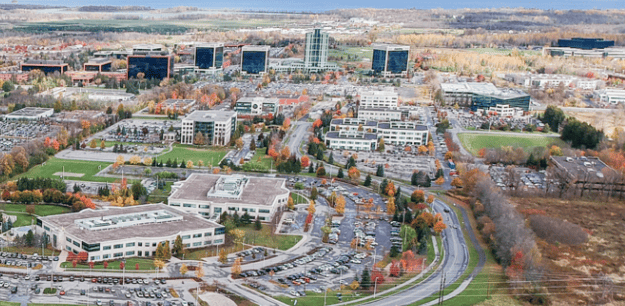
Ottawa’s tech rise actually rests on two very different, yet perfectly balanced parts of the city. One of them is Kanata North, often called Canada’s answer to Silicon Valley. It is a massive innovation park home to tens of thousands of engineers and hundreds of companies. Today, Kanata North boasts over 540 tech companies, while the broader tech sector accounts for more than 65,000 jobs across the city. In fact, Ottawa leads most North American metropolitan areas in tech talent concentration per capita.
Unlike Toronto or Vancouver, with their overheated real estate markets and skyrocketing rents, Ottawa offers a significantly more affordable cost of living while maintaining high salaries in the tech sector. Furthermore, backed by two major research universities, government laboratories, and a high density of PhD professionals, the city boasts Canada’s highest per-capita concentration of scientists and engineers.
It all started years ago with telecommunications and fiber optics, but over time, the area evolved into an international powerhouse for “deep” engineering. Today, this is where teams build network infrastructure, next-generation wireless communications, semiconductors, photonics, and autonomous vehicle technology. Kanata North has become a place where complex ideas turn into advanced hardware and system software.
It houses industry giants like Nokia, Ericsson, and Ciena alongside hundreds of specialized labs. The defining feature of Kanata North is its focus on core engineering—working with hardware, complex code, and system architecture that demands deep academic expertise.
Downtown Ottawa: Where Tech Meets Public Governance
In the very heart of the city, a completely different cluster has emerged. Proximity to government institutions created a unique niche—a sector where technology intersects with public policy, national security, and regulation.
Key focus areas here include:
- Cybersecurity and data protection. Companies build solutions to safeguard critical infrastructure and secure digital identities;
- RegTech (regulatory technology) and FinTech. Development of tools designed to automate compliance, analyze financial risks, and secure transactions;
- B2B and GovTech SaaS platforms. Software optimizing operations for major corporations and public institutions (prominent examples include Shopify, SurveyMonkey, and Thales).
This dual-engine structure makes Ottawa’s job market remarkably resilient: if one sector experiences a temporary slowdown, the other catches the momentum.

Anatomy of Demand: The Specialists Shaping the Future
The shift in job market demand became clear when hiring companies needed more than just people who could write code. Today’s top business priority is specialists capable of solving real-world, practical problems at the intersection of multiple fields.
- AI and Machine Learning Engineers are in high demand, but expectations have evolved. While the focus used to be on pure theory and academic research, companies now value the ability to integrate smart algorithms into everyday business processes, computer vision, and natural language processing.
- Cybersecurity specialists have seen a rapid surge in demand. As digital systems grow increasingly complex, protecting data is no longer just about installing antivirus software. It has become a strategic imperative, elevating risk analysts, security architects, and incident response experts to key roles.
- DevOps and Cloud Architects. Modern products require 24/7 uptime. Specialists who can design scalable cloud infrastructures (AWS, Azure, Google Cloud) and automate software deployment using Docker and Kubernetes form the backbone of any tech team.
- Data Analysts and BI Experts. The capacity to translate chaotic data streams into actionable business decisions has become crucial for both private enterprises and public sector organizations.
- Full-stack Developers. Versatile professionals proficient in modern stacks (Python, JavaScript/TypeScript, Go) who understand both frontend and backend architectures.

Skills That Matter: From Code to Empathy
Ottawa’s technological leap has completely redefined the concept of the “ideal candidate.” The era of lone geniuses working behind closed doors for hours on end is officially over.
Programming languages themselves are just tools. The market is looking for professionals with a broader mindset. Python’s versatility—used in data analysis, AI, and automation scripts—makes it a major asset. Alongside this, experience with containerization tools like Docker or Kubernetes is highly valued, as it enables the creation of resilient, scalable products. Meanwhile, cloud platform certifications from AWS, Azure, or Google Cloud often serve as the deciding factor during the hiring process.
Still, technical proficiency is only half the battle, as modern development has expanded far beyond pure engineering. As teams become cross-functional, adaptability takes center stage. Tech stacks refresh every few years, making the ability to learn quickly far more valuable than knowing a single framework.
Product mindset is equally critical—understanding exactly what user problem a piece of code solves rather than simply checking off a technical task. Finally, all of this relies on clear communication. The ability to explain complex technical concepts in plain language to management or clients remains a rare, yet immensely valuable skill.

System Access: How the Support Ecosystem Works
One of Ottawa’s key advantages is the absence of barrier walls for newcomers. The city has built efficient pathways for career growth.
Local educational powerhouses—the University of Ottawa, Carleton University, and Algonquin College—agilely adapt their curricula to market demands. Rather than spending years on foundational theory alone, professionals can complete short micro-credentials in cybersecurity, AI, or data analytics.
Moreover, learning resources are accessible at the municipal level: even public libraries offer residents free access to leading global learning platforms.
A thriving environment is fostered not only by tech giants like Shopify, but also by a robust startup infrastructure. The region’s primary innovation hub, Invest Ottawa, alongside its base at Bayview Yards, equips young ventures with accelerators (such as IO Ignition and IO ScaleUp), venture capital access, and specialized R&D testing environments for emerging technologies.

Integrating New Talent
Ottawa has historically been open to international talent. Streamlined immigration pathways and targeted sector support help global professionals connect directly with local employers. For those starting out or pivoting careers, grassroots communities like TechTuesday offer informal networking with industry leaders on an equal footing.
However, this prestigious status comes with high standards. The average annual IT salary in Ottawa ranges between $90,000 and $115,000, raising the bar during recruitment. Competition for junior-level roles is exceptionally fierce, meaning basic theoretical knowledge or short bootcamp courses are no longer enough—employers are seeking candidates who can deliver practical value and adapt from day one.

Why This Experience Matters to Everyone
Ottawa’s evolution from a quiet administrative capital into a thriving tech hub isn’t just a successful city case study. It’s a compelling example of how the modern approach to work is changing. We often assume that ambitious projects require massive budgets or vast infrastructure alone. Ottawa proves that people and collaborative environments—where ideas can be freely shared and developed—are what truly drive success.
These takeaways are relevant regardless of your field. Clinging to outdated methods is becoming increasingly unsustainable. Those who adapt quickly will thrive. You don’t necessarily need to write code, but understanding how modern tools work and maintaining a curiosity for innovation is vital.
Most importantly, the tech world still runs on human connection. The ability to collaborate, explain complex ideas simply, and build meaningful relationships is just as vital as technical expertise. Viewing change as an opportunity to grow rather than a threat ensures you remain in demand, no matter how the economy shifts.