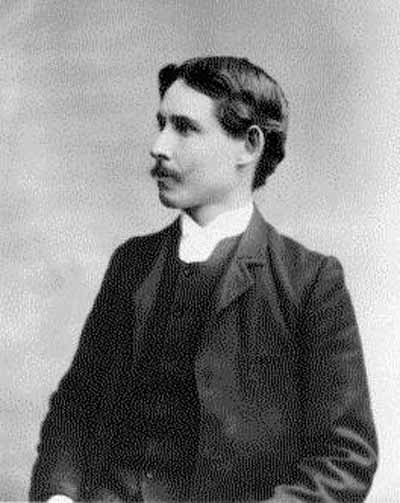
Traveling along Ontario’s scenic Highway 3 near the village of Morpeth, visitors will find a remarkable memorial plaque in the courtyard of Trinity Anglican Church. Erected by the federal government back in 1920, it marks the birthplace of Archibald Lampman, a visionary writer officially recognized as a Person of National Historic Significance.
For modern readers, Lampman’s life is an inspiring testament to how creative passion can overcome daily monotony, financial struggles, and a tragically short lifespan—he passed away at just 37, living from 1861 to 1899. Yet, he left an indelible mark on the nation’s cultural identity. Ottawa1.one explores how a regular small-town youth transformed into the definitive poet of Ottawa and one of the most influential lyricists of the 19th century.
A Civil Servant with a Romantic Soul
Though rooted in rural Ontario, Archibald Lampman’s destiny was deeply intertwined with the nation’s capital. He spent most of his adult life in Ottawa working as a low-ranking clerk in the Post Office Department. While this government job provided a steady, albeit modest, income, it felt like a prison to Lampman’s creative spirit. He openly dreaded the mind-numbing paperwork, feeling trapped within the suffocating confines of his office walls.
Poetry was his true escape, his religion, and his ultimate calling. The moment the clock struck the end of the workday, Lampman would grab his notebook and flee the chaotic city streets. He headed for the countryside surrounding Ottawa, finding his peace among the untamed forests, rivers, and rolling hills.
Lampman belonged to the celebrated Confederation Poets, a generation of writers born around the 1860s who effectively established the first distinct body of English-Canadian poetry following Confederation.
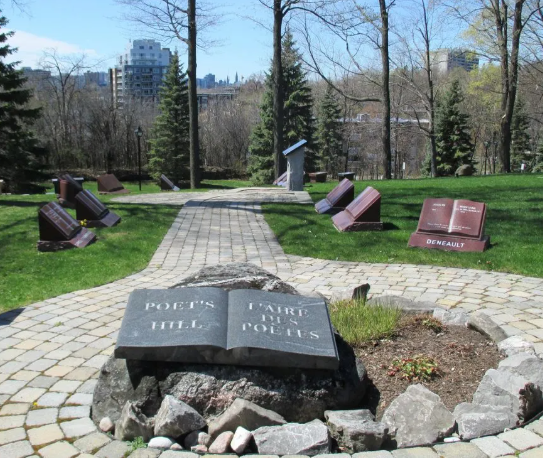
A Masterpiece in Stained Glass
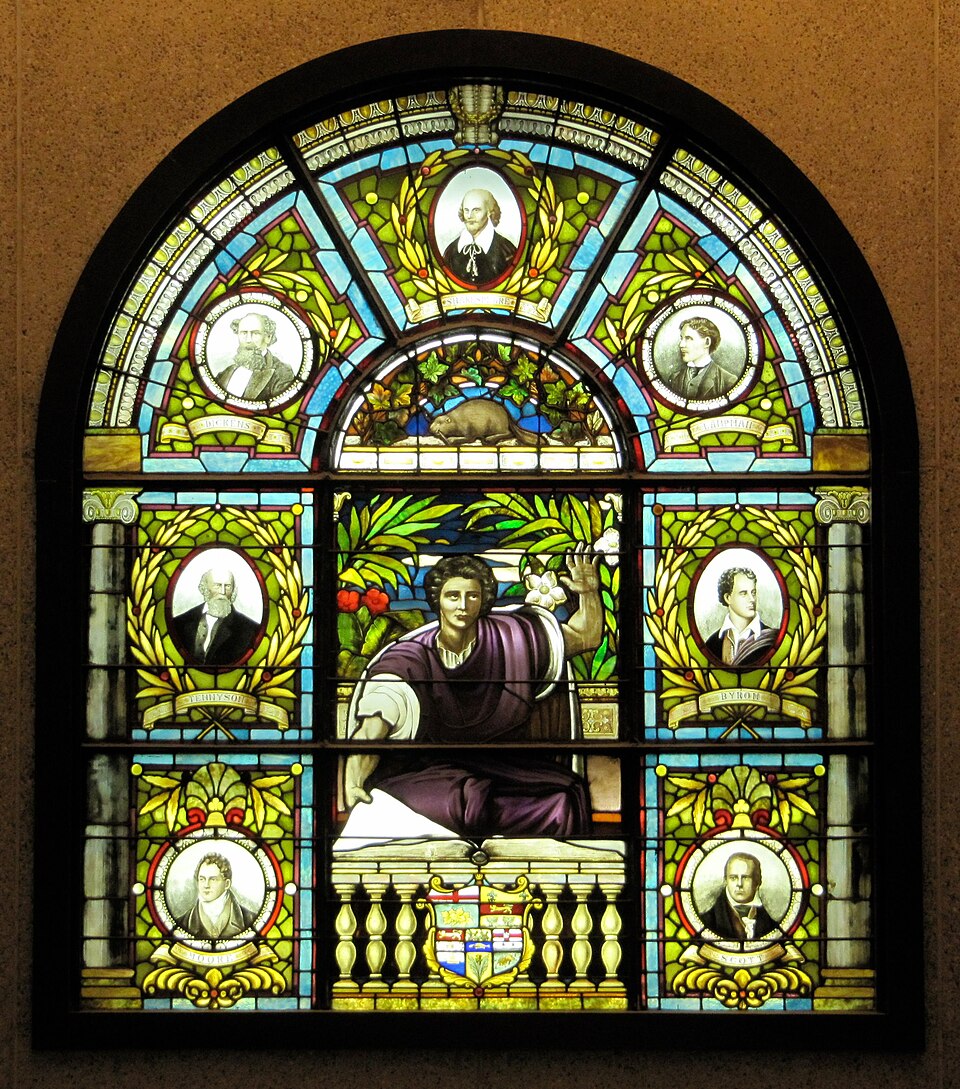
Housed within the Ottawa Public Library system, a stunning stained-glass window serves as a vibrant tribute to classical and Canadian literature. At the center of the composition, beneath a Canadian beaver and a historic coat of arms, stands an allegorical figure representing artistic inspiration. Surrounding her are circular portraits of legendary authors who shaped both world literature and Canada’s emerging identity. A place of honor is dedicated to Ottawa’s iconic duo and close friends, Archibald Lampman and Duncan Campbell Scott. Their portraits are etched in glass alongside global literary giants like William Shakespeare, Charles Dickens, Lord Byron, Alfred Tennyson, and Thomas Moore. This visual tribute highlights how early 20th-century Canadian culture sought to build a bridge between traditional European roots and the wild majesty of the New World. It reflects the rich cultural preservation efforts often celebrated by institutions like Library and Archives of Canada.
Bringing British Romanticism to the Canadian Wilderness
To truly understand how Lampman crafted his imagery, how his verses sound in their original English, and what the landscapes that inspired him looked like, check out this atmospheric video:
Lampman’s work blended European romantic traditions with the rugged reality of the Canadian wilderness. His writing clearly reflects the influence of English masters like John Keats and Matthew Arnold, alongside 19th-century American literature.
However, Lampman was no mere copycat. He adapted sophisticated European poetic techniques to fit Canadian landscapes. Instead of manicured English gardens, he celebrated dense, untouched brush, fierce winter blizzards, and humid summer days. Ultimately, he taught Canadians to find profound beauty in their own wild, untamed environment.
An Early Voice Against Industrial Capitalism
It would be a mistake to dismiss Lampman as just a quiet nature poet. His work carries a powerful social commentary that feels more relevant today than it did a century ago.
Working in the heart of the nation’s capital, he witnessed the dark side of rapid urbanization and industrial growth. Lampman deeply resented how a highly mechanized, capitalist society began to crush the human spirit, erasing individuality and inner peace. His poetry became an artistic protest against the dehumanizing forces of modern civilization, positioning nature as the ultimate antidote to a machine-driven world.
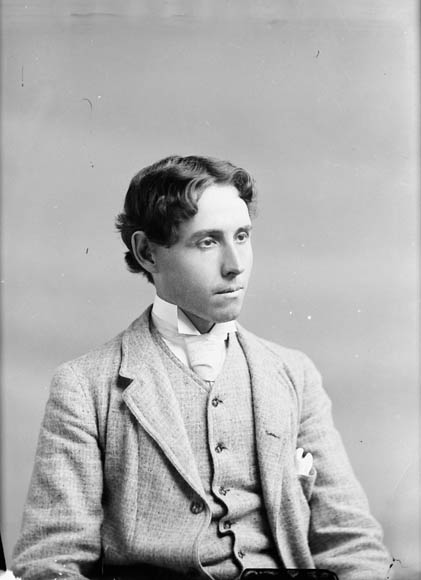
The Published Works of Archibald Lampman
During his lifetime, Lampman managed to publish only two major collections. A third was released shortly after his sudden passing. His complete works were later meticulously compiled and preserved by his close friend and fellow poet, Duncan Campbell Scott.
The Publication Timeline of Archibald Lampman:
| Year | Collection Title | Status / Legacy Notes |
| 1888 | Among the Millet and Other Poems | Lifetime publication. This debut volume established his reputation as a master of Canadian landscape poetry. |
| 1893 | Lyrics of Earth | Lifetime publication. His second volume solidified his status as Canada’s leading nature lyricist. |
| 1900 | The Poems of Archibald Lampman | Posthumous publication. The first major comprehensive collection, edited and arranged by Scott a year after Lampman’s death to secure his legacy. |
| 1925 | Lyrics of Earth: Poems and Ballads | Posthumous publication. An expanded edition released by Scott, featuring previously unpublished ballads. |
| 1943 | At the Long Sault and Other New Poems | Posthumous publication. Released decades later, this book introduced readers to Lampman’s later, deeply emotional, and dramatic works. |
Duncan Campbell Scott plays a crucial role in this story. Without his dedication to sorting through Lampman’s archives after 1899, Canadian literature might have lost a massive portion of these poetic masterpieces. This dynamic mentorship and artistic stewardship mirrors the later traditions of leadership and mentorship seen in Ottawa’s cultural history.
From the Printed Page to a Cinematic Masterpiece
In 1961, the National Film Board of Canada (NFB) produced a stunning 13-minute documentary-style short film titled Morning on the Lièvre, transforming Lampman’s words into a visual triumph.
The film follows two men canoeing down the Lièvre River in Quebec while a narrator reads five of Lampman’s poems: “Solitude,” “After Mist,” “Ambition,” “Dawn on the Lièvre,” and “Morning on the Lièvre.” The sequence mirrors the progression of a day, starting from the pre-dawn fog and moving to high noon. The film closes with the poet’s personal manifesto—rejecting urban sprawl in favor of the wild outdoors.
The two travelers on screen were inspired by Lampman’s real-life friendship with Duncan Campbell Scott, who first introduced Archibald to the world of wilderness camping and canoe trips.
While Lampman’s poems were inspired by a springtime trip, persistent bad weather forced director David Bairstow to shoot during the autumn. Ironically, this twist enhanced the film, as the vibrant autumn foliage and framing choices intentionally mimicked the iconic painting style of Canada’s Group of Seven and Tom Thomson. To bring the water scenes to life, the filmmakers added thrilling shots of rushing river rapids set to a custom score by Eldon Rathburn.
Though originally intended as an educational resource for schools, the film became an international sensation, winning:
- The Silver Bear at the Berlin International Film Festival (1961);
- Best Theatrical Short at the Canadian Film Awards (1962);
- Prestigious honors at film festivals in Edinburgh, Boston, Columbus, and Brussels.
Why Lampman Matters to the Digital Generation
Archibald Lampman’s life came to an abrupt end in Ottawa in 1899. However, his official status as a Person of National Historic Significance isn’t just a boring footnote in school textbooks. It is a modern recognition of an artist whose voice accurately identifies the anxieties of life today.
His biography reads like a manual for a generation dealing with chronic burnout, digital fatigue, and technological overload. Lampman demonstrated firsthand how vital it is to carve out a personal sanctuary away from the daily grind and the noise of the city.
In an era where we constantly seek a “digital detox” to escape smartphone notifications, Lampman’s poetry offers the perfect guide. Reading his work feels like hitting the pause button on modern life—it is the literary equivalent of taking a quiet walk through the woods after an exhausting day at the office. His words ground us, serving as a powerful reminder of authentic, living values that even the smartest machines can never truly replace.